
By: Marc McMahon
*I just want to reiterate the fact that when I write something on here, it’s never coming from a place of me sitting above you all looking down, not ever. It’s me sitting right next to you, and
A chunk of that time is spent sitting in the dirt, but we remain, and that’s our strength.
I write about where I am at in life, and share some of the wisdom I have somehow extracted from the experiences I have endured traveling this road I have somehow been given to navigate.
I also write about thoughts I have that hit me straight in the chest with what seems to be a little clarity, and not having lots of people in my inner circle, I share them with you all because it’s generally too much for me to carry alone a lot of the time, if I am being honest with you.
This is one of those thoughts, something I had noticed about our society that I never fully understood, and maybe I was never meant to, but I think I see it now, and it hit me like a brick. I was like WTF. I think I might be onto something. Actually, I know I am, so hear me out and take it for what it’s worth. It’s too much to carry alone, and those closest to me still refuse to understand, so thank you for always being here, and remember.
“Alone we don’t stand a chance, but together we can change the world.”
The silence isn’t an accident. It’s an architecture.
If you’ve taken a walk through your neighborhood lately or stepped onto a downtown sidewalk, or stood in line waiting for a cup of coffee you’ve likely experienced the ghost act. You pass someone coming from the opposite direction. You look up, catch their eyes for a fraction of a second, and offer the standard human baseline: “Good morning.” Or maybe just a polite nod and a soft “Hey, how’s it going?”
Decades ago where I grew up, and where a lot of us grew up that wasn’t a radical political statement. It was just civil protocol. It was the low-frequency glue that held small towns and working-class neighborhoods together. You acknowledged the person sharing the dirt with you. It took zero energy, cost no money, and left both parties with a micro-dose of shared reality.
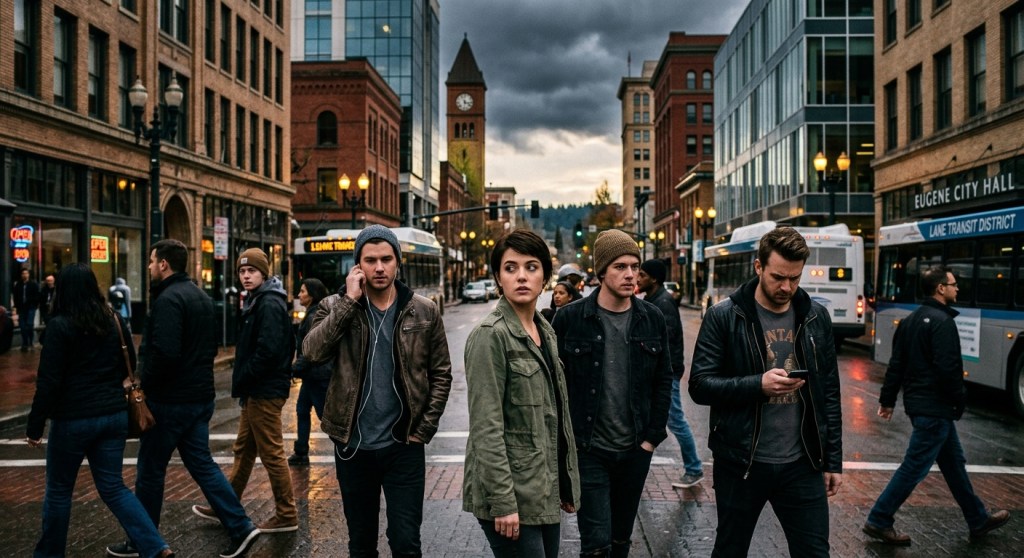
Today? You throw that line out to anyone under thirty-five, and more often than not, you’re met with a physical retreat. Eyes drop instantly to a glowing glass rectangle. Earbuds are adjusted like armor. Faces lock up into a mask of total neutral detachment, or worse, mild alarm as if a polite “Good afternoon” was the opening salvo of a home invasion.
At first, you write it off as an age gap. You tell yourself it’s just the classic generational divide. Kids these days, right? They grew up with “Don’t Talk to Strangers” drilled into their skulls on a 24-hour news loop, and somewhere along the line, they internalized a protective warning and turned it into a permanent personal identity. They retreated behind screens, traded face-to-face friction for digital safety, and decided that unprovoked human contact is an inherent threat.
That’s the easy explanation. It’s clean, it’s comfortable, and it blames technology and bad parenting.
But if you sit with it for a minute if you pay attention to how culture actually moves—your gut starts telling you a much darker story.
This didn’t just happen by accident.
Look at the structure of control. If you wanted to neutralize a population—if you were sitting in a room thinking about how to prevent a fragmented, exhausted, financially squeezed public from ever actually organizing against the machinery squeezing them—how would you do it?
You wouldn’t build bigger prisons. You wouldn’t put guards on every corner. That’s sloppy and expensive, and it gives people a clear enemy to fight.
No, you do something far more elegant. You sever the wiring at the lowest possible level. You break the fundamental habit of human connection.
To build a movement, to build a community, or to build a collective front that can say “No more” to whatever fresh nightmare the powers-that-be are rolling out this week, you need one basic ingredient: trust. And trust doesn’t start with a manifesto or a political party. Trust starts on the sidewalk. It starts when two people who don’t know each other look each other in the eye, recognize a shared humanity, and realize they aren’t enemies.
If you can condition a whole generation to view every stranger as a potential threat, an annoyance, or an intruder on their personal space, you win before the fight even begins. You don’t have to break up a crowd if you can make sure the crowd never forms in the first place.
Think about the sheer efficiency of it. You take a third of the population — young, capable, energetic people who should be the backbone of any real social resistance—and you turn them into isolated islands. They live in curated, algorithmic bubbles designed to amplify fear and outrage, while completely stripping them of the real-world reps needed to navigate a basic interaction with a stranger.
When shit hits the fan—when the economic pressures get tighter, when the institutions fail completely, when the baseline survival of a community depends on neighbors leaning on neighbors—a third of our people won’t even know how to ask the person next door for a hand. They won’t know how to speak to anyone outside their immediate birth-year cohort because they’ve been taught that the outside world is toxic by default.
They think they’re being cautious. They think they’re setting boundaries. They think they’re protecting their peace.
The tragedy of it is that they have no idea they’ve been played.
They think dodging your eye contact on the sidewalk is an act of self-care, when in reality, it’s the final stage of a long-term isolation campaign. They’ve been tricked into building their own solitary confinement cells, locking the door from the inside, and calling it “privacy.”
So where does that leave the rest of us?
It leaves us holding the bag, trying to figure out how to bridge a gap that was deliberately dug wide enough to keep us apart. It leaves us feeling like aliens in our own towns just because we still remember what it feels like to treat a stranger like a human being instead of a virus.
You can get bitter about it, or you can see the game for what it is.
When you say “Good morning” to someone today, you aren’t just being polite. You’re committing a small, quiet act of rebellion against an apparatus that wants us cold, divided, and terrified of each other.
The next time you walk past someone in their twenties or thirties and throw out a friendly greeting, don’t get angry when they flinch, look away, or pull their hood up tighter. Don’t take it personally.
Just look at them with a little bit of pity. Because every time a human being cowers from a simple, warm word on a sunny afternoon, the people running the show get exactly what they paid for—and the kid on the sidewalk doesn’t even realize who holds the remote.
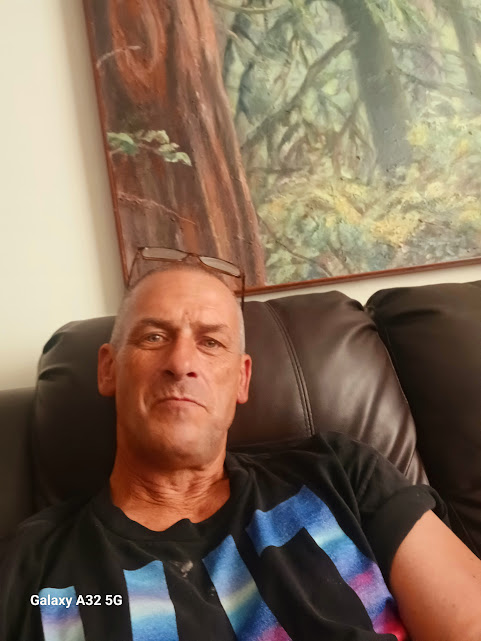
About the Author: Marc McMahon is an author and observer of the systematic collapse of control, writing from the intersection of human error and inner divinity. Once a programmed citizen, he now documents the “Tough Truth” of recovery, memory, and the unseen frequencies between our words. He writes to find the others who are ready to stop watching from the sidelines and look the silence in the eye.


Leave a Reply