
By: Marc McMahon
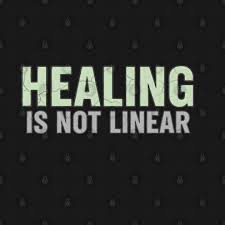
Let’s start with something the recovery industry will never say out loud: most people don’t get clean in a straight line. They don’t climb out of addiction like it’s a staircase. They claw their way out like it’s a trench. They slip, they fall, they crawl, they get up, and sometimes they fall even harder the second time.
But the system built to “help” us? It was designed for the staircase people. The ones who move neatly from Step One to Step Twelve like they’re checking boxes on a clipboard. The ones who fit into charts, timelines, and graduation ceremonies.
If you’ve been failing that line, hear me clearly: you’re not failing recovery. You’re just doing it the way real human beings actually do it.
I was born December 13, 1968. I’ve lived long enough to know exactly how much damage a person can do to their own life and still wake up the next morning. In 2016, I fled Washington State — not for a fresh start, not for a romantic reinvention, but because prison was closing in. Drug charges. A cage. A countdown. When every option is bad, you pick the one that keeps you breathing free air for one more day.
I left everything behind except what I could carry on my back. I became a ghost moving across the country with no destination. For a full year, I lived without an address — shelters, sidewalks, park benches, nights so cold they felt like they were trying to erase me.
When you live on concrete, the world strips away every comfortable lie you ever told yourself. You learn exactly how low your floor is. You learn how far you can drop. You learn which parts of you break and which refuse to. And you learn whether anything inside your chest still wants to climb.
Eventually, I landed in Eugene, Oregon. I thought that was the turn — the chapter where the music shifts and the sun comes out. And for a minute, it did. I got stable. I got hopeful. I started believing maybe the worst was behind me.
Then my own head caught up with me, and I relapsed.
After everything. After all the miles. After all the running. After all the starving and surviving.
I picked up again.
That’s the part the straight‑line story doesn’t have room for. That’s the part where counselors shake their heads, the system logs a failure, and shame starts whispering that you’re a fraud. You sit in a room listening to people talk about their clean time while you’re holding a fresh burn or a fresh regret.
Let me tell you something: that doesn’t make you a fraud. It makes you human.
During that same stretch, I came within reach of suicide for the third time. Not the first. Not the second. The third. Standing on that razor‑thin edge again, wondering if checking out was easier than waking up to another day of fighting my own blood.
And still, I chose forward motion.
Not because I had a breakthrough. Not because a meeting cracked me open. Not because I suddenly “got it.” I didn’t have an epiphany. I didn’t have a revelation. I didn’t have a spiritual awakening.
I just made a quiet, stubborn, bloody‑minded decision to keep moving.
That’s the whole secret. Forward motion away from addiction is enough.
It doesn’t have to be pretty. It doesn’t have to be linear. It doesn’t have to match the twelve‑step script or your family’s expectations or the treatment center’s timeline.
It just has to be forward.
Messy forward. Crawling‑through‑the‑mud forward. One‑step‑and‑then‑stumble forward.
I founded Recovery UnSENSORED because I was done with the sanitized version of this story — the one where you hit rock bottom, surrender, work the steps in numerical order, and emerge transformed with a chip and applause. That’s one story. It’s real for some people. But it’s not the only story.
When we pretend it is, we abandon everyone whose recovery looks jagged, dark, and complicated. We lose them to shame — and shame is the quietest, deadliest killer in addiction.
Shame tells you that if you slip, the last six months didn’t count. Shame tells you that if you stumble, you’re back at zero. Shame tells you to burn the whole house down and stay high. Shame isolates you from the people who could pull you back up.
My path — from running down highways and sleeping on benches to writing this, publishing work, and building a movement that might actually reach someone still stuck in the dirt — was not a straight line. It was jagged, ugly, terrifying.
And it was still recovery the whole damn time.
Every morning, you choose not to let the poison take your entire future. Even if you messed up yesterday, you are in recovery. Every breath toward surviving another twenty‑four hours is an act of defiance against a disease that wants you dead.
If your path has sharp turns, backward steps, and dark alleys, stop measuring yourself against someone else’s straight line. Throw away their ruler. Stop waiting for the moment when it all becomes clean and respectable.
You don’t need a neat story to deserve a life. You don’t need a perfect arc to earn another day. You don’t need applause to keep going.
You just need to refuse to stop moving.
Drop the shame right here. Take the bruise. Take the stumble. Take the imperfect step.
Yours is recovery too. And as long as you’re still breathing, the story isn’t over — it’s still being written, deep in your gut.
About the Author: Marc McMahon is an author and observer of the systematic collapse of control, writing from the intersection of human error and inner divinity. Once a programmed citizen, he now documents the “Tough Truth” of recovery, memory, and the unseen frequencies between our words. He writes to find the others who are ready to stop watching from the sidelines and look the silence in the eye.


Leave a Reply