
By: Marc McMahon
When You’ve Tried Everything and Nothing Works: A Path for the Ones Like Us
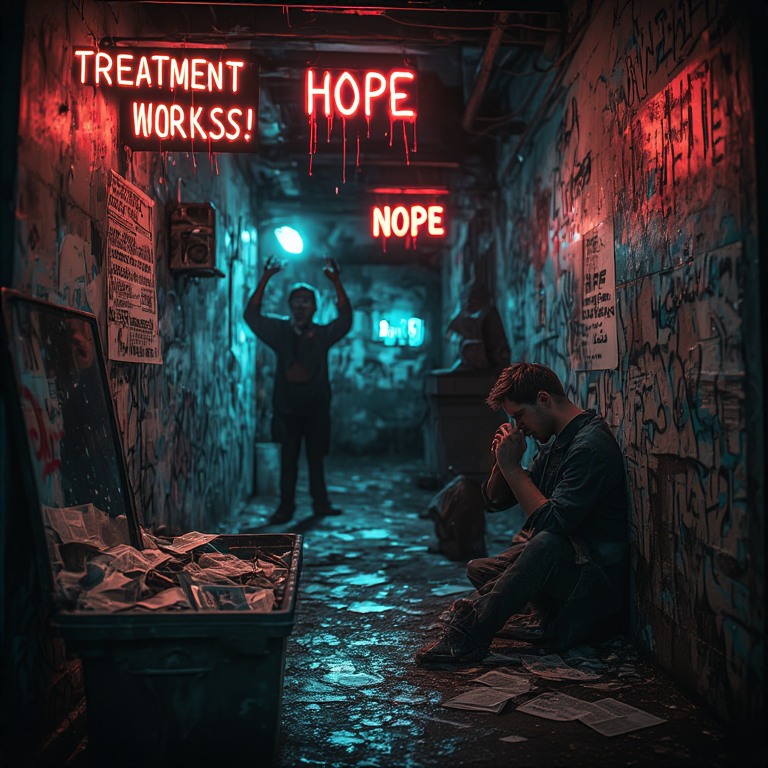
There’s a whole group of us in the recovery world who rarely get acknowledged. We’re not the miracle stories. We’re not the chip‑collectors. We’re not the ones who walk into a meeting once and never use again. We’re the ones who tried, really tried, year after year, program after program, and still couldn’t make it stick.
I’m talking to the people like me.
The ones who self‑admitted to treatment every year for a decade because we genuinely wanted to get better. The ones who did inpatient psych units, detox after detox, 30‑day, 60‑day, 90‑day cycles. The ones who did two years in jail and came out thinking, “If that didn’t fix me, what will?” The ones who had one good year clean once, just one, and then watched it slip away like it never happened.
And after all that, the question hits you in the chest:
So what do you do when nothing works?

Nobody prepares you for that part. Nobody tells you what to do when you’ve followed the script exactly and still didn’t get the promised result. Nobody tells you how to keep going when you’ve tried everything they told you to try and you’re still stuck in the same loop.
But here’s the truth I wish someone had told me years ago:
You’re not broken. You’re not hopeless. You’re not a failure. You’re not alone.
The problem isn’t you, it’s the idea that recovery is one‑size‑fits‑all.
The Turning Point: Meeting My Shadow Instead of Fighting It
After a decade of trying everything the traditional way, I reached a point where I had nothing left to lose. I wasn’t willing to die, but I also wasn’t willing to keep repeating the same cycle expecting a different outcome. That’s when I stumbled into something I never expected: shadow integration.
Not abstinence‑only. Not “kill the addict.” Not “pretend that part of you doesn’t exist.” Not “surrender harder.”
Shadow integration is the opposite of all that. It’s the work of turning toward the part of you everyone told you to fear, hate, or exile and actually listening to it.
And here’s the part that shocked me more than anything:
When I stopped treating my addict like a monster and started treating it like a wounded part of me that needed understanding, it didn’t take over. It didn’t grab the car keys, the wallet, and the sack and disappear on a multistate crime spree. It didn’t destroy me.
It actually… lost its power.
I went from using a half‑ounce a month to a few days a month, if that. Not perfect. Not abstinent. Not the kind of recovery that gets applause in a 12‑step room. Some people would laugh and say it’s not recovery at all.
But here’s what I know:
My quality of life improved. Dramatically. And isn’t that the whole point, the whole reason I was even trying to quit? I think so.
Why Shadow Integration Works When Other Methods Don’t
Shadow integration isn’t about controlling your addict. It’s about understanding it. It’s about recognizing that the part of you that uses isn’t evil, it’s protective. It’s trying to help you survive pain you didn’t know how to handle. It’s a coping mechanism that overstayed its welcome.

When you integrate your shadow:
- You stop fighting yourself.
- You stop living in shame.
- You stop white‑knuckling.
- You stop pretending you’re someone you’re not.
- You stop splitting into “good me” and “bad me.”
And when that internal war ends, something incredible happens: the compulsion loses its grip.
Not because you forced it. Not because you punished it. Not because you shamed it. But because you finally understood it.
Shadow integration gives you something abstinence‑only models rarely offer: a relationship with yourself that isn’t based on fear.
Shame Isn’t sobriety; it’s a Control Mechanism
One of the biggest shifts I found through shadow integration was this: once the shame is gone, you get your power back.
People don’t talk about that because most recovery cultures depend on shame to keep people “in line.” Shame is the leash. Shame is the currency. Shame is the tool used to create, perpetuate, and maintain control. And I’m not saying that to attack anyone — I’m saying it because I lived it.
I learned something wild when I stepped outside that system: the self doesn’t come with default shame. It has to be installed.
And the installation usually comes from the outside, from programs, from dogma, from groups that believe fear is the only thing keeping you alive. But when you strip all that away, when you stop feeding the shame machine, something incredible happens:
You don’t collapse. You don’t spiral. You don’t lose control.
You just… return. You try again. No harm, no foul.
Because trying again is still forward motion. Trying again is still growth. Trying again is still recovery.
Without shame, the “relapse” isn’t a moral failure it’s data. It’s information. It’s a signal. It’s a moment to adjust, not a reason to hate yourself.
Shame shuts you down. Integration wakes you up.
And once you’re awake, you start to realize something the traditional models never told you:
You were never powerless, you were just ashamed.
Recovery Isn’t About Perfection — It’s About Quality of Life
I don’t care if someone still uses sometimes. I don’t care if their path is messy or nonlinear or unconventional. If their quality of life is improving — if they’re safer, more stable, more connected, more alive — then that matters.
That counts.
We’ve been told for so long that recovery only “counts” if it looks one specific way. But that mindset is arrogant, naive, and honestly, cultish. It leaves millions of people out in the cold. It tells them they’re failures when really, they just need a different approach.
Shadow integration is that approach for a lot of us.
It’s not about quitting to earn approval. It’s about healing so deeply that the need to escape loses its intensity. It’s about building a life where you don’t have to run from yourself anymore.
If You’re One of the Ones Like Me… There Is Hope
If you’re reading this and you’re one of the ones who’s tried everything — treatment after treatment, detox after detox, psych units, jail time, the whole cycle — and nothing has worked, I want you to hear this:
You are not out of options. You are not beyond help. You are not beyond change. You are not done.
Shadow integration might be the doorway you’ve been missing.
Not because it’s magic. Not because it’s easy. But because it finally lets you work with yourself instead of against yourself.
And for some of us, that’s the first time recovery has ever felt possible.
About the Author:Marc McMahon. Once, a six-month-old with a gun in his mouth. Now the man who walks back into the darkest basements carrying a light most refuse to admit exists. He turns pain into wisdom, rage into rescue, and terror into testimony, proving that light and shadow can not only coexist but become fiercely productive together. When you read his words, you don’t just read a story; you feel a hand reach through the page, grab yours in the dark, and pull you toward the open door.
A true survivor who writes so the rest of us know we never have to stay trapped again.


Leave a Reply